
I. Choose the word, phrase, or sentence that best fits the space in each sentence or best answers the question. (3.5 pts). ⇱
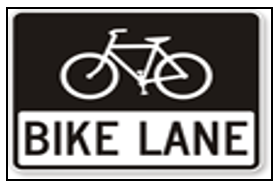
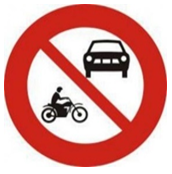
II. Look at the sign or the notice. Choose the best answer for questions 15 and 16. (0.5 pt) ⇱
III. Choose the word that best fits the blank space in the following passage. (1.5 pts) ⇱
Where Were LEGO Bricks Invented?
In 1932, a carpenter named Ole Kirk Kristiansen started a company in Billund, Denmark, that (17) ______ wood stepladders, ironing boards, and toys. He named the company LEGO, a word (18) ______ by combining the first two letters of leg and godt, the Danish word for "play well". Soon, Kristiansen was making only (19) ______ toys out of wood.
After World War II, LEGO started producing plastic toys. In 1949, the company launched Automatic Binding Bricks, its first interlocking construction blocks. In the 1950s, the name was changed to LEGO bricks, and the company came out with the LEGO System of Play, which included 28 sets and 8 vehicles. It (20) ______began selling the toys (21) ______of Denmark for the first time. In 1958, LEGO received a patent for the modern bricks so famous today. The new bricks not only had studs on top but tubes inside that lock onto the studs of other bricks and hold them (22) ______together.
https://www.englishrevealed.co.uk/PET/Reading_Part_5/pet_multiple choice_close_5.php
IV. Read the following passage. Decide if the statements from 23 to 26 are True or False. Choose the correct answer for questions 27 and 28. (1.5 pts) ⇱
Food miles: Is buying local food always better?
Recently, campaigners have encouraged us to buy local food. This reduces 'food miles', that is, the distance food travels to get from the producer to the retailer. The reason is that the higher the food miles, the more carbon emissions. Buying local food, therefore, has a lower carbon footprint and is more environmentally friendly.
However, the real story is not as simple as that. If our aim is to reduce carbon emissions, we must look at the whole farming process, not just transportation. According to a 2008 study, only 11% of carbon emissions in the food production process result from transportation, and only 4% originated from the final delivery of the product from the producer to the retailer. Other processes, including fertilization, storage, heating and irrigation, contribute much more.
Recently, some supermarkets have been trying to raise awareness of food miles by labeling foods with stickers that show it has been imported by air. But ultimately, the message this gives is too simple. Lots of different factors contribute to a food's carbon footprint besides the distance it has travelled. And even if we only buy local food which is currently in season, there are ethical implications. What's more, our diets would be more limited.
https://test-english.com/reading/b1-b2/is-buying-local-food-always-better-reading-test/
V. Use the correct form of the word given in each sentence. (1.5 pts) ⇱
VI. Look at the entry of the word “exploration” in a dictionary. Use what you can get from the entry to complete the sentences with two or three words. (0.5 pt) ⇱
