
I. Pronunciation (1-4) ⇱
II. Choose the answer (A, B, C or D) that best fits the space in each question. (5-14) ⇱
III. Look at the signs. Choose the best answer (A, B, C or D). (15-16) ⇱

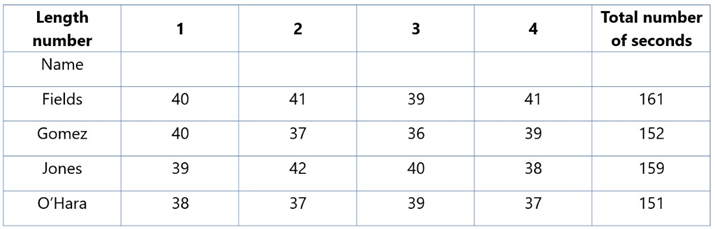
IV. Read the following passage and do as directed. (17-22) ⇱
Scientist Marie Curie made important discoveries in the area of radioactivity. She was born in Poland in 1867. She went to France to study science and became the first woman to win a Nobel Prize in physics. She later won another Nobel Prize in science for her work in finding the elements radium and polonium. Even though she was a woman working in an area dominated by men, Curie stayed committed to her work and kept making important contributions to science. She died in 1934 from being exposed to radiation, but she will always be remembered as a leader in the field of nuclear science and a role model for scientists to come.
V. Choose the word (A, B, C or D) that best fits the blank space in the following passage. (23-28) ⇱
People have been ____23____ with how fast they can run for centuries. Over time, humans have ____24____ their speed and technique, allowing ____25____ to run faster than ever before. The current world record for the 100-meter dash is held by Usain Bolt, who ran it in just 9.58 ____26____. This is an incredible feat, as it means he was running at a ____27____ of over 27 miles per hour! However, it's not just professional athletes who can run fast. With practice and training, anyone can improve their speed and reach their full potential. Whether it's for exercise ____28____ competition, running is a great way to challenge yourself and stay healthy.