
I. Choose the word, phrase, or sentence that best fits the space in each sentence or best answers the question. (3.5 pts). ⇱
8. Mom: Those shoes are disgusting!
Child: But I like them!
Mom: Let's _______ your old pair of shoes. They're too worn out.
13. Mary had difficulty carrying her parcels upstairs, and her friend Luke offered to help.
Luke: “Need a hand with your parcels, Mary?”
Mary: “_______”
14. Janet and Phillip are talking about Patrick.
Janet: “Patrick was born and brought up in New York, so he must know it very well.”
Phillip: “_______ He couldn’t even tell me where to buy some souvenirs there.”
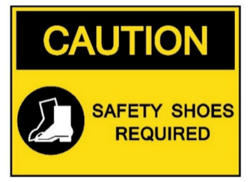
II. Look at the sign or the notice. Choose the best answer for questions 15 and 16. (0.5 pt) ⇱

III. Choose the word that best fits the blank space in the following passage. (1.5 pts) ⇱
Moments in space history
On October 4,1957, the Soviet Union sent Sputnik 1 into space and a new age in history began - The Space Age. The Soviets (17) ________ more Sputnik satellites in the fifties and by 1961 they had put the first man into space. Eight years later, an American finally walked on the moon, and during the (18) _______ seventies the US led the Soviet Union in the space race. However, space travel was expensive, and they needed to co-operate more. Nearly two decades later, leaders from both countries said they had agreed (19) ________ plans for a new International Space Station (ISS), and by the turn of the century the ISS had started (20) ________ the Earth. Nowadays, the ISS is used by scientists from all over the world.
At the beginning of the twenty-first century, businessman Dennis Tito told the world he loved space as he spent eight days on the ISS. Since then, space (21) ________ has developed with plans for regular tours and floating hotels. And what about the next half a century? In 2010, the US president Barack Obama told (22) ________ that by the mid-2030s the US would send humans to Mars. The race for Mars has already started.
Adapted From “Life - Pre-Intermediate Student’s Book"
IV. Read the following passage. Decide if the statements from 23 to 26 are True or False. Choose the correct answer for questions 27 and 28. (1.5 pts) ⇱
A long and healthy life
While in the past scientists have looked at things such as diet and lifestyle for an explanation of long life, these days they are investigating genetics. One such researcher is Eric Topol, who says, ‘There must be genes that explain why these individuals are protected from the aging process.’
The new research into long life looks at groups of people who have a genetic connection. For example, one group of interest lives in Ecuador. In one area of the country, there are a number of people with the same genetic condition. It’s called Laron syndrome. The condition means that they do not grow to more than about one meter, but it also seems to give them protection against cancer and diabetes. As a result, they live longer than other people in their families. Meanwhile, on the Hawaiian island of Oahu, there’s another group of long-lived men, Japanese - Americans. They have a similar gene to the Laron syndrome group.
In Calabria, scientists are trying to work out exactly how much of the longevity is due to genetics and how much to the environment. By checking public records going back to the 19th century, researchers have reconstructed the family trees of 202 nonagenarians and centenarians. They concluded that there were genetic factors involved. And they seemed to benefit the men more than the women - a surprising result because generally in Europe, there are five times more women centenarians than men.
V. Use the correct form of the word given in each sentence. (1.5 pts) ⇱
VI. Look at the entry of the word “essential” in a dictionary. Use what you can get from the entry to complete the sentences with two or three words. (0.5 pt) ⇱
