
I. Choose the word, phrase, or sentence that best fits the space in each sentence or best answers the question. (3.5 pts). ⇱
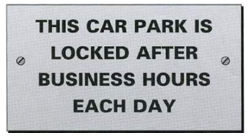
II. Look at the sign or the notice. Choose the best answer for questions 15 and 16. (0.5 pt) ⇱

III. Choose the word that best fits the blank space in the following passage. (1.5 pts) ⇱
Satellite that can clean up space junk with a magnet about to launch
A satellite is about to demonstrate a new way of (17) ______ space junk with magnets for the first time. With the frequency of space launches dramatically increasing in recent years, the potential for a disastrous collision above Earth is continually growing. Now, Japanese orbital clean-up company Astroscale is testing a potential solution.
The firm's End-of-Life Services by Astroscale demonstration mission is scheduled to lift off on 20 March aboard a Russian Soyuz rocket. It consists of two spacecraft: a small "client" satellite and a larger "servicer" satellite, or "chaser". The smaller satellite is (18) ______ with a magnetic plate which allows the chaser to dock with it.
The two stacked spacecraft will perform three tests once (19) ______ orbit, each of which will involve the servicer satellite releasing and then recapturing the client satellite. The first test will be the (20) ____, with the client satellite drifting a short distance away and then being recaptured. In the second test, the servicer satellite will set the client satellite tumbling before catching up with it and matching its motion to grab it.
Finally, if those two tests go well, the chaser will live up to its name by letting the client satellite (21) ______ a few hundred meters away before finding it and attaching to it. All of these tests will be performed autonomously, with (22) ______ to no human input once they are set in motion.
Satellite that can clean up space junk with a magnet about to launch - New Scientist
IV. Read the following passage. Decide if the statements from 23 to 26 are True or False. Choose the correct answer for questions 27 and 28. (1.5 pts) ⇱
For a long time scientists have been trying to find out if dinosaurs were warm- or cold-blooded. For some time they thought that dinosaurs, which became extinct 65 million years ago, were reptiles and therefore cold-blooded like their successors.
In today's world, creatures are either warm-blooded, with a constant body temperature or cold-blooded, with a body temperature that changes in the world around them.
New facts suggest that they might have been neither, and both at the same time. Today, tuna fish, white sharks and leatherback turtles are animals that fall into this category.
In recent research, scientists have started comparing dinosaur bones to those of modern mammals. Similar to the rings of a tree, examining bones can show you how fast an animal grows or gains weight. According to the results, they had growth rates and metabolic rates that are somewhere in-between warm and cold-blooded animals. Information shows that dinosaurs had a high metabolic rate, letting them to grow faster. This allowed dinosaurs to get bigger than they would normally have become. Warm-blooded animals, mammals and birds, usually eat a lot to "keep up" their body temperature.
Cold-blooded animals need less food and are rather slow in their movements. While this is the case with most dinosaurs, there were also some, like the Tyrannosaurus rex, that were rather fast.
V. Use the correct form of the word given in each sentence. (1.5 pts) ⇱
VI. Look at the entry of the word “expression” in a dictionary. Use what you can get from the entry to complete the sentences with two or three words. (0.5 pt) ⇱
