
I. Pronunciation (1-4) ⇱
II. Choose the answer (A, B, C or D) that best fits the space in each question. (5-14) ⇱
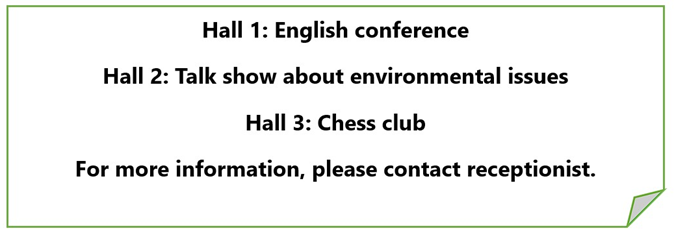
III. Look at the signs. Choose the best answer (A, B, C or D). (15-16) ⇱

IV. Read the following passage and do as directed. (17-22) ⇱
Nonverbal communication plays a significant role in our interactions. It includes facial expressions, gestures, posture, and eye contact. Our body language often communicates our feelings and emotions, even without saying a word. For example, a smile can express happiness, while crossed arms may indicate defensiveness or disagreement. Eye contact shows engagement and interest in a conversation. Understanding nonverbal cues helps us interpret messages accurately and respond accordingly. By being aware of our own body language and observing others', we can enhance our communication skills and develop better connections with those around us. Nonverbal communication adds depth and richness to our interactions, allowing us to convey subtle messages and understand others beyond spoken words.
True/False Statements:
V. Choose the word (A, B, C or D) that best fits the blank space in the following passage. (23-28) ⇱
Technology has _____23_____ the way we communicate. We now have various tools and platforms that enable us ____24______ with others instantly, regardless of distance. Social media platforms like Facebook and Instagram allow us to share updates and connect _____25_____ friends and family. Messaging apps like WhatsApp and Messenger help quick and convenient _____26_____ through text, voice, and video. Video conferencing tools like Zoom and Microsoft Teams enable virtual meetings and collaborations. Technology has also made information readily _____27_____, allowing us to access news, research, and knowledge from anywhere. While technology has made communication more convenient, it's important to use it _____28_____ and balance virtual interactions with face-to-face communication for a well-rounded communication experience.